Discover Tsuki’s Odyssey, a cozy mobile game filled with decorating, farming, fishing, cute characters, collectibles and life in Mushroom Village.

Tsuki’s Odyssey: A Guide to the Cozy World of Mushroom Village
I’ve played a lot of cute mobile games, but Tsuki’s Odyssey is one I keep coming back to.
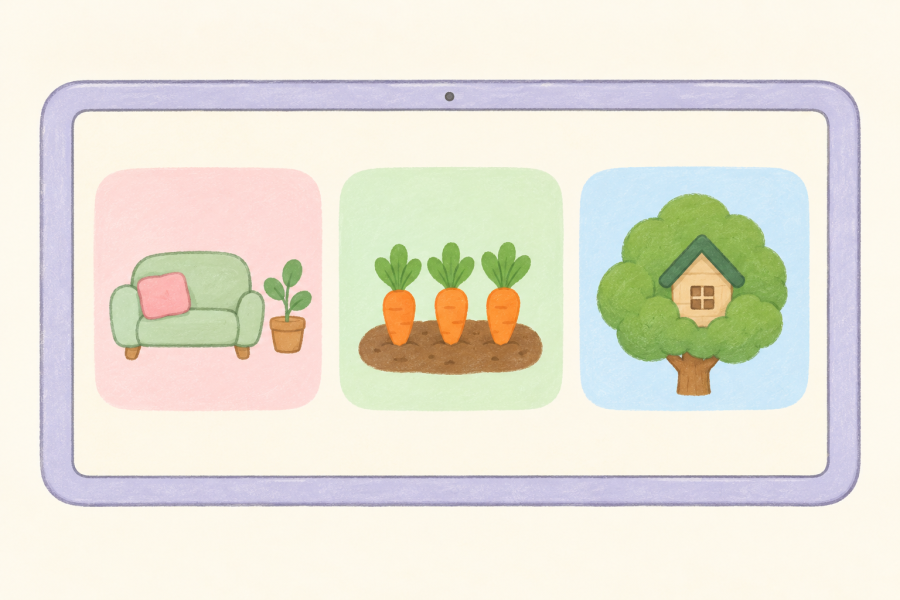
It’s slow, cute, sometimes a little strange, and full of small details that are easy to miss. You can decorate a giant treehouse, grow carrots, go fishing, collect furniture and Gacha toys, talk to the residents of Mushroom Village and occasionally discover that the game lets you do something ridiculous like steal someone’s pen.
But Tsuki’s Odyssey is also different from many mobile games because it doesn’t expect you to play constantly.
Tsuki has his own life. Sometimes you open the game and he’s reading. Sometimes he’s eating ramen, fishing, drinking tea, sleeping or using a piece of furniture you placed days ago.
You’re part of his world, but you don’t control everything he does.
If you’re curious about Tsuki’s Odyssey—or you’ve just started playing—this is a good place to begin.
What Is Tsuki’s Odyssey?
Tsuki’s Odyssey is a passive, cozy mobile game set mainly in Mushroom Village.
Tsuki is a little rabbit who lives in a treehouse and has a group of animal friends around the village. The game is published by HyperBeard and continues the world introduced in the earlier game Tsuki Adventure.
At the beginning of Odyssey, Tsuki returns to Mushroom Village after a trip and discovers that a thief has stolen his furniture.
It’s an unfortunate homecoming, but it gives you a very good excuse to start decorating.
From there, the game opens gradually. New locations, characters and features appear over time, often through the Daily Carrot newspaper.
This is not a game you are supposed to finish quickly.
Tsuki Is Not a Character You Directly Control
This is one of the most important things to understand about Tsuki’s Odyssey.
Tsuki is a free spirit.
You can choose locations on the map, interact with characters, fish, harvest crops, shop and decorate, but you don’t control Tsuki with a joystick or tell him exactly what to do all day.
He lives his own little life.
That can feel unusual when you first start playing. You may open the game and wonder, “What am I supposed to do now?”
Sometimes, the answer is simply: not much.
If you’ve just downloaded the game and aren’t sure where to begin, my Tsuki’s Odyssey beginner’s guide explains what to do during those first days and why you shouldn’t worry if your map initially looks rather empty.
Mushroom Village Slowly Comes to Life
You don’t have access to everything immediately.
The Daily Carrot newspaper helps move the game forward. New stories can introduce characters, open locations and start little events around the village.
Over time, Mushroom Village becomes much busier.
You’ll get to know Chi the giraffe, Moca the turtle, Yori the fox, Benny the dog, Bobo the panda and many other characters.
They have their own routines and personalities, and their conversations change. It’s worth talking to them regularly instead of assuming you’ve already heard everything they have to say.
Friendships also matter. As your relationships with certain characters develop, you can eventually unlock additional features, including the ability to decorate more locations.
Decorating Is a Huge Part of the Game
If you like decorating games, this is probably where Tsuki’s Odyssey becomes dangerous.
Yori’s shop constantly rotates its furniture stock, so there is always something new to look at.
You can decorate Tsuki’s treehouse and farm, and later you can unlock other areas for decorating too.
There are different furniture collections, seasonal items and Shiny versions of many regular pieces. Some furniture can also be created through special combinations in Dawn’s Junker.
And Tsuki actually uses many of the things you place.
You might carefully arrange a room, close the game and return later to find Tsuki sitting in a chair, reading on the floor or interacting with an object you had almost forgotten about.
Those little surprises are part of what makes decorating fun.
Carrots Are Your Main Currency
Carrots pay for most of your shopping, and Yori seems remarkably talented at making them disappear.
Your farm provides a regular source of carrots, but it isn’t the only way to earn them.
You can fish and sell your catches, complete fish bounties, collect certain daily rewards, do camera bounties, sell unwanted items and use a few other methods.
There are also optional ads that reward carrots if you choose to watch them.
If you are constantly looking at your carrot balance and wondering where it all went, I have a full guide on how to get more carrots in Tsuki’s Odyssey.
Fishing Is More Useful Than It First Appears
Fishing is one of the activities you can do around Mushroom Village.
You can sell your fish to earn carrots, but before selling everything, check the bounty board at Town Hall.
Certain fish are requested as daily bounties and are worth considerably more when turned in that way.
There are also different fish available depending on the location and time, which gives collectors another reason to keep fishing.
And because this is Tsuki’s Odyssey, not everything you pull out of the water is necessarily a fish.
There Is a Lot to Collect
Furniture is only the beginning.
You can collect fish, Gacha toys, mixtapes, Parsnap photos, event items and other objects as you play.
The GachaBoy at Town Hall uses Gacha Tickets and contains different collectible figures. Gold capsules are particularly interesting because they contain rare versions.
Mixtapes can be played in cassette players and actually change the music at a location.
Parsnap, meanwhile, works a little like a social media app for Tsuki’s world. New images appear as Tsuki experiences different moments around Mushroom Village.
You can ignore most of the collecting if that isn’t your thing, or you can become completely obsessed with completing everything.
Tsuki doesn’t judge.
The Game Has More Secrets Than It First Appears
For such a peaceful-looking game, Tsuki’s Odyssey has a surprising amount of mischief.
You can eventually steal Benny’s pen.
You can punch the GachaBoy.
You can break Dawn’s Junker.
There are unusual achievements, hidden interactions, furniture combinations and small storylines that are very easy to miss if you only open the game to harvest your carrots.
I’ve collected some of my favorites in my guide to Tsuki’s Odyssey secrets and things you might miss.
That is one of the reasons the game stays interesting over time. Even after playing for months, you can still discover something you didn’t know was possible.
Seasonal Events Change Mushroom Village
Tsuki’s Odyssey also has seasonal events throughout the year.
These can bring special furniture, decorations, activities and character interactions to the village.
Event items are only available during their associated events, although events return, so missing something doesn’t necessarily mean you’ll never have another chance to get it.
I particularly like how the seasonal decorations change the feeling of familiar places without turning the game into something completely different.
Is Tsuki’s Odyssey Free?
Tsuki’s Odyssey is free to play, with optional purchases.
You can play the game without buying Homecoming, its main paid expansion. The free game still includes the core Mushroom Village experience, decorating, farming, fishing, friendships, events and collecting.
Homecoming expands the game with additional features and content, including more decorating and farming options.
It isn’t something you need to buy when you first start playing.
There are also optional rewarded ads in the game. You choose whether you want to watch them in exchange for rewards such as carrots.
What About Tsuki Adventure?
Tsuki’s Odyssey wasn’t Tsuki’s first game.
Tsuki Adventure introduced Tsuki and Mushroom Village several years earlier. Many familiar characters appear in both games, but they aren’t simply two versions of the same game.
Tsuki Adventure puts more emphasis on Tsuki’s diary, friendships and travelling to locations outside Mushroom Village.
Odyssey greatly expands decorating, farming, collecting and life within Mushroom Village.
If you’re curious about the original game, I have a full comparison of Tsuki Adventure vs. Tsuki’s Odyssey and what actually changed between them.
You don’t need to play Adventure before starting Odyssey.
Who Would Enjoy Tsuki’s Odyssey?
Tsuki’s Odyssey is a good fit if you enjoy cute characters, decorating, collecting and games that don’t demand constant attention.
It is probably less appealing if you want fast progression, lots of action or a long list of tasks to complete every time you log in.
Sometimes very little happens.
That’s intentional.
You may harvest your carrots, check Yori’s shop, talk to a few villagers and close the game five minutes later. Then you might return that evening and discover a new conversation, newspaper story, piece of furniture or strange interaction.
The game rewards checking in rather than rushing through it.
Where to Go Next
If you’re starting Tsuki’s Odyssey, begin with my beginner’s guide. It explains the early progression and what you should actually focus on when Mushroom Village still feels empty.
If you need more carrots, the carrot guide covers the different ways to earn them without filling this article with farming details.
Once you’ve been playing for a while, the secrets guide has some of the stranger features and interactions you may have missed.
And if you’re wondering how all of this compares with Tsuki’s original game, the Tsuki Adventure vs. Tsuki’s Odyssey comparison explains the biggest differences.
There is a surprising amount hiding inside this very quiet little game.
And I think that is exactly why I’m still playing it.