Find easy color combinations for kawaii drawings, with pastel palettes, brighter options, and practical tips for coloring cute characters.
Best Colors for Kawaii Drawings: Easy Palettes to Try
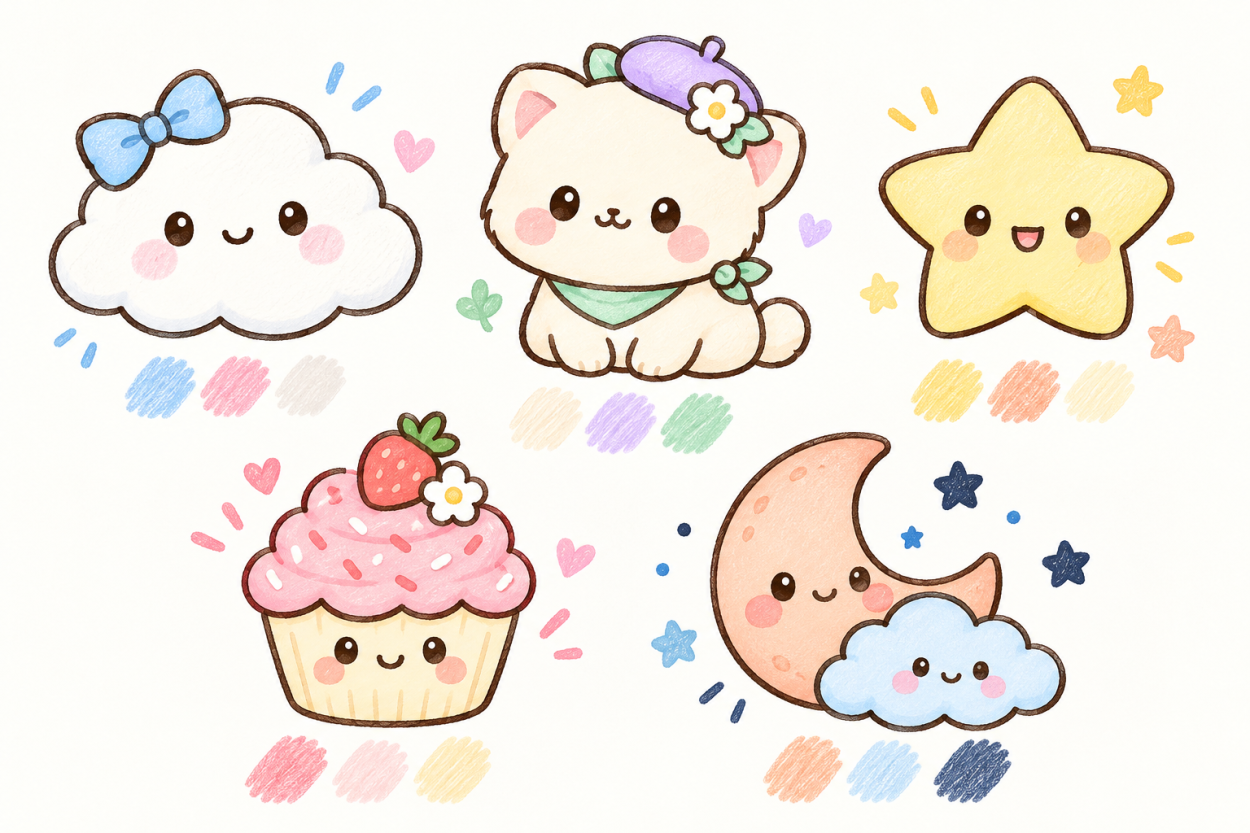
Choosing colors for a kawaii drawing can be as enjoyable as drawing the character itself. A pink cat, a mint-green cupcake wrapper, or a little yellow star can each give you a different starting point.
If you’re unsure what goes together, begin with two or three colors and add a darker shade for the eyes and outlines. Here are some combinations to try, along with ways to use them.
Start with a Small Color Palette
For a simple drawing, choose one main color, one supporting color, and a small accent. You can leave parts of the paper white rather than filling every space.
For example, a cupcake could have pink frosting, a mint wrapper, and yellow sprinkles. Dark brown eyes and a tiny smile complete the drawing without needing more colors.
If you need something to practice on, follow our three easy kawaii drawing tutorials to draw a face, cat, or cupcake.
Five Kawaii Color Combinations to Try
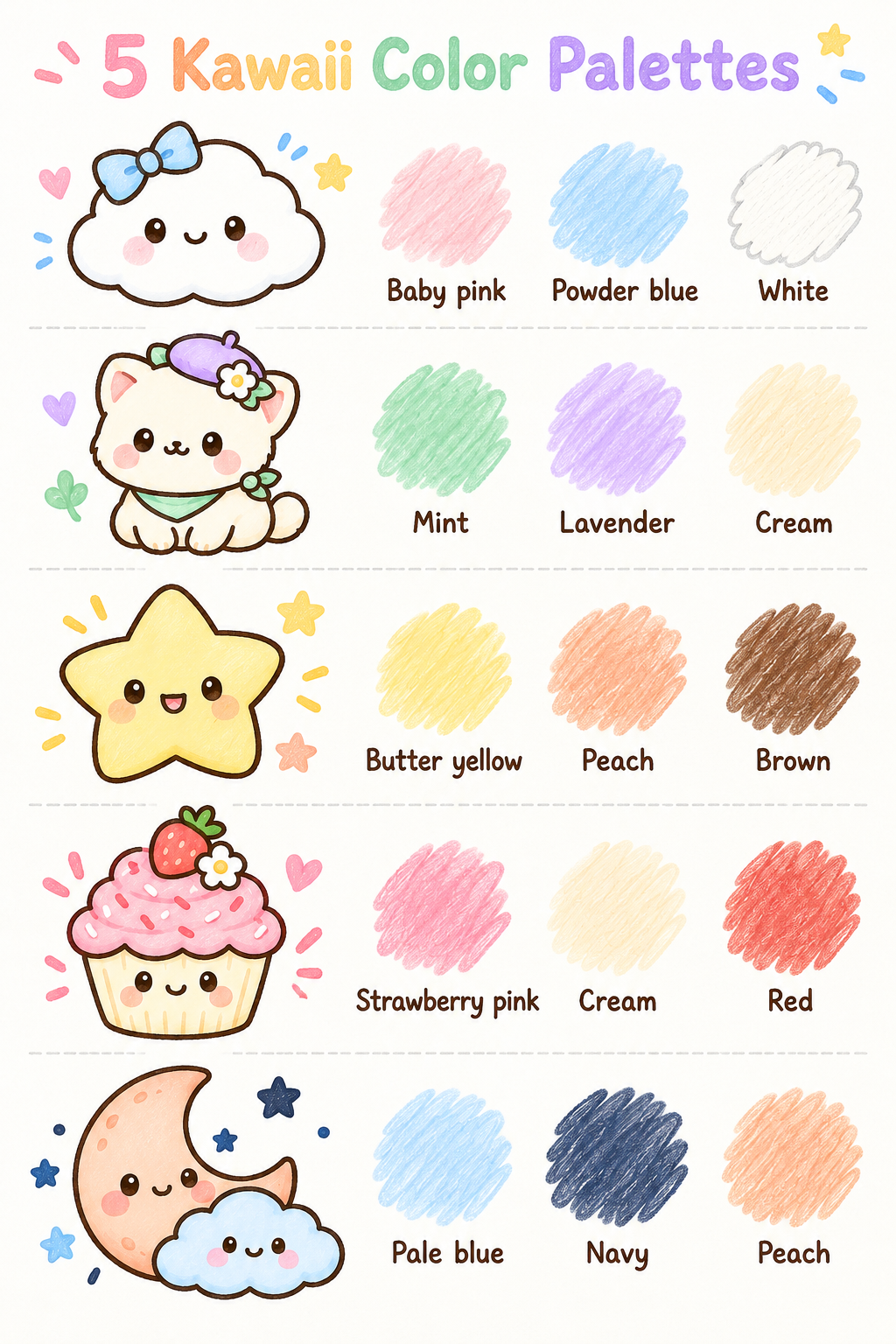
| Color combination | A drawing to try | Where to use each color |
|---|---|---|
| Baby pink, powder blue, and white | A cloud with a bow | White cloud, blue bow, pink cheeks |
| Mint green, lavender, and cream | A little animal character | Cream fur, lavender accessory, mint background |
| Butter yellow, peach, and brown | A smiling star | Yellow star, peach cheeks, brown facial features |
| Strawberry pink, cream, and red | A cupcake or strawberry dessert | Pink frosting, cream cake, small red decorations |
| Pale blue, navy, and peach | A sleepy moon scene | Pale blue background, navy details, peach moon |
These are starting points. Swap one shade for a color you already have, or use the same combination on several drawings to make a matching set.
Do Kawaii Drawings Have to Use Pastels?
Pastels are useful when you want a soft look, but brighter colors work too. A red strawberry, a sunny yellow chick, or a rainbow accessory can still look cute.
If a bright palette feels too busy, give one color most of the space and use the others in smaller areas. For a rainbow design, you could keep the character white and put the colors in its scarf or umbrella.
Choose an Outline Color
Black gives a clear outline, especially around small eyes and mouths. Dark brown is another option if you prefer the softer look used in our drawing tutorials. Navy can work nicely with blue and lavender palettes.
Check that the face remains easy to see against the character’s main color. Very pale eyes or a light outline can disappear when you view the drawing at a smaller size.
Try Different Shades of One Color
You can also build a drawing around a single color. For a pink character, try a pale pink body, medium pink cheeks, and a darker pink accessory.
Leaving a little white space between similar shades helps separate the details. You don’t need to add shading everywhere; a few flat areas of color are enough.
Add Gentle Shading and Small Highlights
If you’d like to give your drawing a little depth, choose a slightly darker version of its main color. Add a narrow shadow beneath a cat’s chin, along one side of a star, or under a cupcake’s frosting. Imagine the light coming from one direction so your shadows stay consistent.
With colored pencils, start with light pressure and build up the shadow gradually. A flat-color drawing can look just as cute, so this step is optional.
For a shiny detail, leave a small patch of paper white or add a dot with an opaque white gel pen once the color is dry. Try it on a strawberry or a character’s eyes; one or two highlights are usually enough.
Test Your Colors Before Filling the Drawing
Make a few small swatches on spare paper first. Put the colors beside one another, then test your outline color over them.
Colored pencils let you build up a lighter shade gradually. With markers, check the color on the same type of paper you’re using for the drawing. If you draw digitally, save your chosen colors in a palette so you can reuse them.
Choose one combination from the table and try it on a small drawing. Once you’ve seen how it looks, change one color and see which version you like best.