Meet ten influential kawaii artists and character designers, from Hello Kitty and Rilakkuma to Chiikawa, Gudetama and Pusheen.
10 Kawaii Artists and Character Designers You Should Know
Behind many of our favourite kawaii characters is an artist who turned a simple idea into something memorable. Some created sleepy bears or shy animals, while others brought cute designs into fashion, illustration and contemporary art.
Kawaii isn’t one particular drawing style. It can be colourful and playful, quiet and comforting, or surprisingly unconventional. These ten artists and designers show how much variety exists within the world of cuteness.
1. Yuko Shimizu — The Original Creator of Hello Kitty
In 1974, Sanrio designer Yuko Shimizu created Hello Kitty, one of the most recognizable characters in the world. The design is remarkably simple: a round face, small eyes, whiskers and a bow. Hello Kitty doesn’t have a visible mouth, and her clean silhouette works on everything from stationery to clothing. Other designers have developed her appearance over the decades, but Shimizu created the original character. Read more about Yuko Shimizu and Hello Kitty’s beginnings.
2. Aki Kondo — The Creator of Rilakkuma
Aki Kondo created Rilakkuma for San-X in 2003, introducing a bear whose favourite activities include resting, eating and avoiding unnecessary effort. His companions Korilakkuma and Kiiroitori add humour to his quiet world. Kondo’s creation helped establish a relaxed kind of kawaii, where a character doesn’t need a grand adventure to be entertaining. Learn more about Aki Kondo’s work and the origins of Rilakkuma.
3. Yuri Yokomizo — The Creator of Sumikko Gurashi
Yuri Yokomizo created Sumikko Gurashi for San-X in 2012. These characters feel more comfortable sitting in corners than being the centre of attention. Shirokuma is a shy polar bear who dislikes the cold, Neko is timid, and Tonkatsu is the leftover edge of a pork cutlet. Their unusual personalities make the group funny and relatable. Yokomizo shows that awkwardness and insecurity can be part of a character’s charm. Read more about Yuri Yokomizo and Sumikko Gurashi.
4. Miyuki Okumura — The Designer of Cinnamoroll
Miyuki Okumura created Cinnamoroll, the long-eared white puppy introduced by Sanrio in 2001. His ears are large enough for him to fly, and his curled tail resembles a cinnamon roll. The pale colours, rounded face and unmistakable ears make him recognizable at a glance. Cinnamoroll is a lovely example of how a simple silhouette can define a character.
5. Emi Nagashima — The Creator of Gudetama
Emi Nagashima, also known by the creative name AMY, designed Gudetama for Sanrio. Unlike energetic mascots, Gudetama is an egg that would rather do nothing. Whether lying on toast or hiding under a bacon blanket, the character expresses a familiar feeling: sometimes even getting started is too much work. Gudetama proves that kawaii can be funny, sarcastic and a little weary.
6. Claire Belton — The Co-Creator of Pusheen
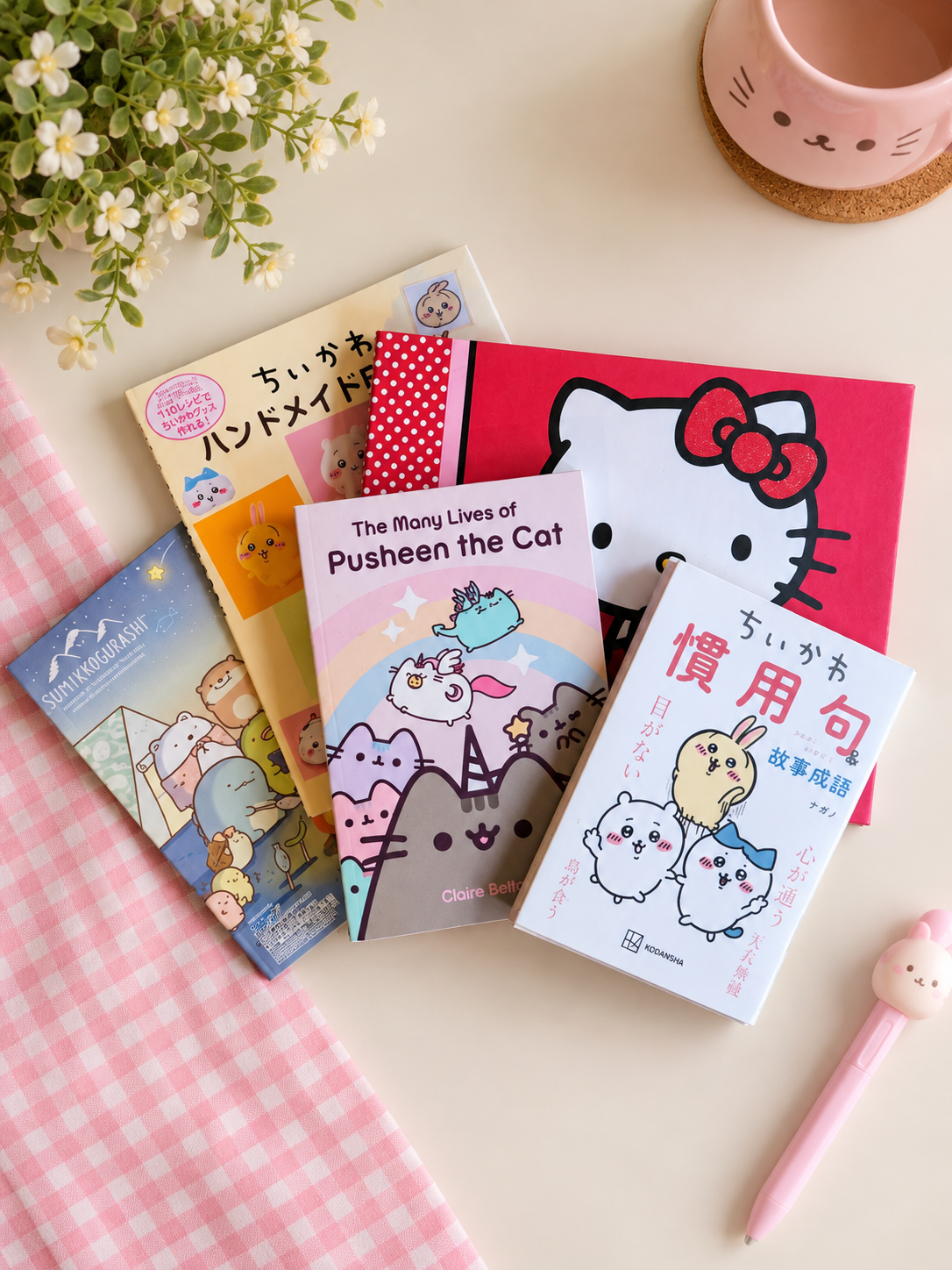
Claire Belton and Andrew Duff introduced Pusheen in a webcomic in 2010. The round grey cat became especially popular through online illustrations and animated stickers. Pusheen eats snacks, naps and dresses up, often with minimal facial expression. Although she originated outside Japan, her rounded shapes and everyday humour share much with kawaii character design. For more about the character, read our introduction to Pusheen.
7. Takashi Murakami — Bringing Cuteness into Contemporary Art
Takashi Murakami is different from the character designers on this list. The contemporary Japanese artist is known for colourful smiling flowers and the artistic concept of Superflat. His work draws connections between traditional Japanese art, anime, commercial imagery and consumer culture. Beneath the cheerful surfaces, his art can explore more complicated themes. Murakami shows how cute imagery can belong in fine art as well as merchandise.
8. Yuko Yamaguchi — Shaping Hello Kitty’s Later Identity
Yuko Yamaguchi did not originally create Hello Kitty; that credit belongs to Yuko Shimizu. However, Yamaguchi has played a major role in developing Hello Kitty’s image during her long association with Sanrio. Keeping a character recognizable while adapting to changing fashions and audiences is a different kind of design challenge. Her contribution reminds us that some famous characters are shaped by several artists over time.
9. Nagano — The Creator of Chiikawa
Japanese illustrator Nagano created Chiikawa, a manga about small, adorable creatures living in a world that isn’t always kind to them. Chiikawa, Hachiware and Usagi enjoy food and friendship, but they also work, face dangers and deal with disappointment. Their rounded shapes and tiny expressions are sweet, yet the stories can be touching, funny or unexpectedly unsettling. Nagano demonstrates how kawaii can explore the uncomfortable parts of everyday life without losing its charm. Discover the artist behind Chiikawa. We also visited Chiikawa Park during our trip; our Character Street vs. Sunshine City comparison explains where it fits into a Tokyo shopping day.
10. Yoon Hye-Ji — The Creator of Molang
Korean illustrator Yoon Hye-Ji created Molang, a round white rabbit with tiny facial features and a simple, appealing design. Molang became widely known through animations featuring the rabbit and a small chick named Piu Piu. The characters communicate through movement and expression rather than elaborate dialogue. Like Pusheen, Molang shows how kawaii-inspired character design has spread far beyond Japan.
What Makes These Artists Different?
Looking at these creators together reveals how varied kawaii can be. Hello Kitty and Cinnamoroll rely on instantly recognizable designs. Rilakkuma and Sumikko Gurashi give their characters relatable personalities. Gudetama adds humour, while Murakami brings cheerful imagery into a completely different artistic setting.
What connects them isn’t a single technique or colour palette. It’s their ability to make a character or image memorable with relatively few visual details. Once you know the people behind these designs, even familiar characters become a little more interesting.