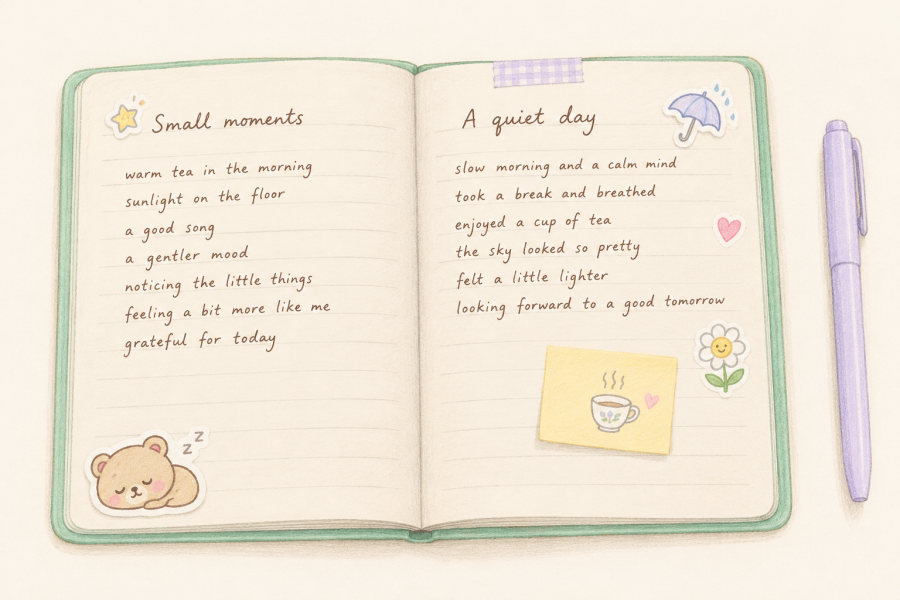
Discover kawaii sticker types, creative uses, collecting tips, and storage ideas, plus ways to decorate planners, journals, and everyday items.

The Ultimate Guide to Kawaii Stickers
Kawaii stickers come in an enormous variety of designs, from tiny smiling animals and pastel desserts to familiar characters like Hello Kitty and Sumikko Gurashi. Some are made for decorating planners, while others are better suited to scrapbooks, collecting, or personalizing everyday objects.
With so many styles, materials, and sizes available, it helps to know what to look for before buying a new sticker sheet.
Whether you’re starting a collection or looking for creative ways to use the stickers you already own, this guide covers the essentials.
What Makes a Sticker Kawaii?
Kawaii is the Japanese word for cute, but kawaii design has a recognizable style of its own.
Characters often have rounded shapes, simple facial expressions, and exaggerated proportions. Animals, food, flowers, and everyday objects might be given tiny eyes and smiling faces.
Pastel colours are common, although kawaii stickers aren’t limited to pink and other soft shades. Bright colours, bold outlines, and playful patterns can be just as appealing.
Many stickers feature established characters from Sanrio, San-X, Pokémon, and other brands. Others are original illustrations created by independent artists.
Different Types of Kawaii Stickers
Not all stickers are made from the same materials, and the differences matter depending on how you plan to use them.
Paper stickers are popular for planners, notebooks, and journals. They are often inexpensive and available in themed sheets. However, they can tear easily and aren’t usually suitable for surfaces that get wet.
Vinyl stickers are generally more durable and can work well on laptops, storage containers, and other smooth surfaces. Some are water-resistant, but that doesn’t automatically make them dishwasher-safe or suitable for outdoor use.
Transparent stickers have clear backgrounds that allow the surface underneath to show through. They’re particularly useful for layered journal layouts.
Washi stickers have a lightweight, paper-like appearance. Depending on the adhesive, they may be easier to reposition than ordinary paper stickers.
Puffy stickers have a raised surface that adds texture. They’re fun for cards and crafts but can make notebooks bulky.
There are also holographic, glitter, metallic, and textured designs for anyone who enjoys unusual finishes.
Before purchasing, check the material and intended use rather than relying only on the product photograph.
Kawaii Stickers for Planners and Journals
Stickers can be decorative, practical, or both.
In a planner, small icons can mark appointments, birthdays, shopping trips, and recurring tasks. A consistent set of symbols can make a busy weekly spread easier to scan.
For example, you might use a little envelope for mail, a shopping basket for errands, or a character sticker to highlight something you’re looking forward to.
Decorative stickers can also separate sections or create a theme for the week.
The trick is to leave enough room for writing. A planner covered in stickers might look lovely, but it isn’t very useful if you can’t read your schedule.
If you would like more ideas, my article on using kawaii stickers in your planner explains how to combine decoration with everyday planning.
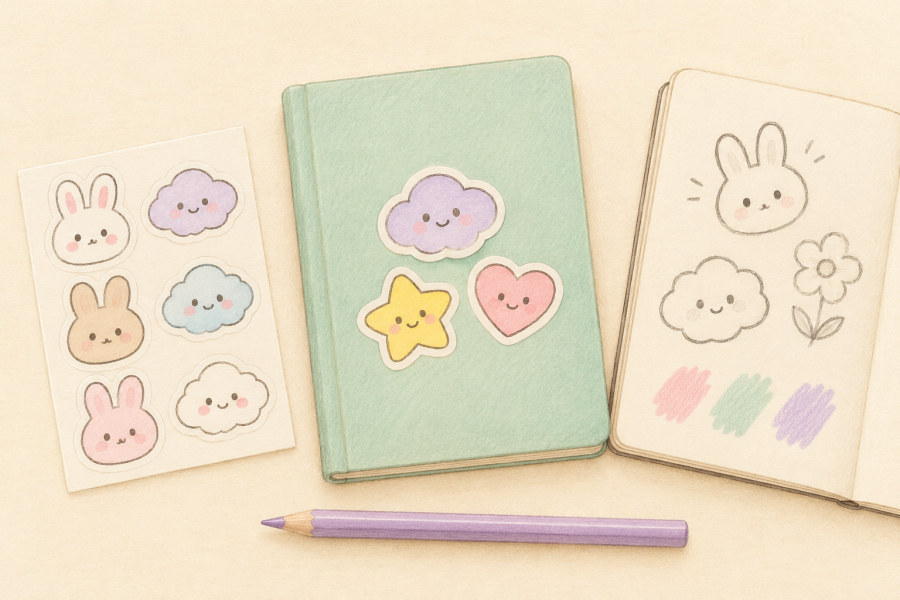
Journals offer more freedom. You can arrange stickers around handwritten entries, create colour themes, or use a favourite character to represent your mood.
Scrapbooking and Memory Keeping
Kawaii stickers work especially well with photographs, postcards, tickets, and other keepsakes.
A travel scrapbook, for example, might include little food stickers beside photographs of memorable meals or character stickers that remind you of a particular shop.
You can also use stickers to create borders, highlight dates, or connect several photographs on a page.
Try choosing a few designs that complement your photographs rather than filling every empty space.
For a more detailed approach, my guide to scrapbooking with kawaii stickers covers page layouts, supplies, and ways to combine decorations with personal memories.
Decorating Everyday Objects
Notebooks, folders, pencil cases, and storage boxes are easy places to use stickers.
Laptops and phone cases are popular choices too, although it’s worth checking whether the adhesive is suitable for the surface. Some stickers leave residue when removed.
For water bottles, look specifically for stickers rated for that purpose. Even water-resistant stickers may need gentle handwashing.
You can also decorate gift tags, greeting cards, bookmarks, and handmade envelopes.
If you are working with children, stickers can be used for simple crafts, storytelling activities, and personalized school supplies. My article about kawaii sticker activities for kids explores those ideas in more detail.
How to Start a Kawaii Sticker Collection
You don’t need to buy large sticker bundles to begin collecting.
Start with a few designs you genuinely like. Perhaps you prefer Japanese characters, tiny animals, miniature food illustrations, or seasonal themes.
Think about whether you want to use your stickers or preserve them as collectibles. That can influence what you buy.
Sticker sheets are convenient for decorating, while individual stickers and limited character releases may appeal more to collectors.
It’s also worth paying attention to size. A design that looks substantial in an online photograph might be surprisingly tiny when it arrives.
Check dimensions, materials, and the number of stickers included before ordering.
Where to Find Kawaii Stickers
Japanese stationery shops and character stores are excellent places to discover kawaii stickers, particularly if you enjoy Sanrio, San-X, or other licensed designs.
Independent artists also produce original sticker collections with distinctive characters and illustrations.
Online shops offer a wider selection, but it’s worth checking product photographs, dimensions, materials, and shipping costs.
If you’re buying character merchandise, choose official or properly licensed products when authenticity matters to you.
Discover My Cute Coco Stickers
I also have my own sticker shop, My Cute Coco, where I offer a collection of kawaii stickers, including my original creations and other designs customized with My Cute Coco’s colours and style.
You can explore the collection at My Cute Coco.

How to Organize and Store Your Stickers
Once your collection grows, finding a particular sticker can become surprisingly difficult.
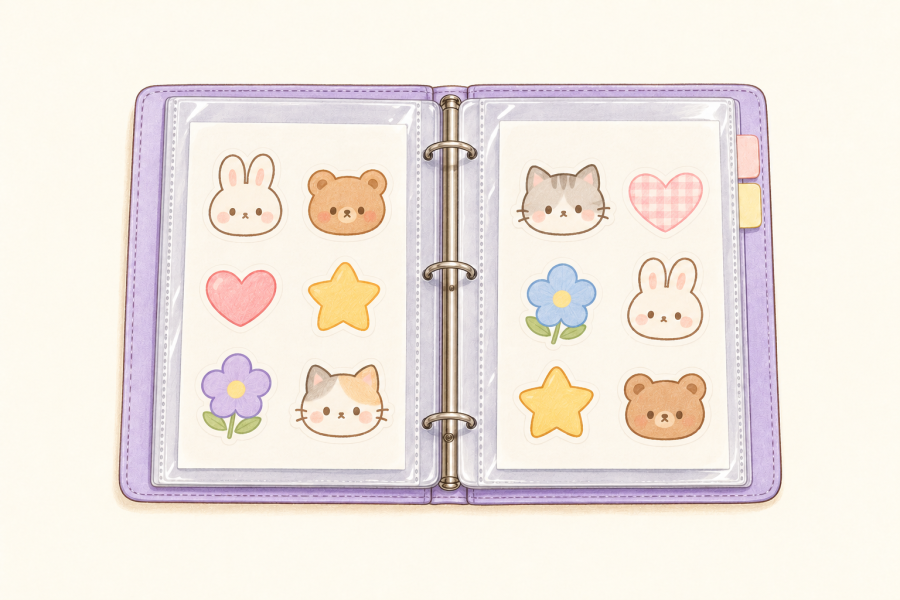
A small binder with clear sleeves is useful for keeping sticker sheets flat and visible. Envelopes and divided boxes work well for loose stickers and smaller collections.
You might organize them by character, theme, size, or intended use.
Keep unused stickers away from direct sunlight, moisture, and excessive heat. These conditions can affect paper, printing, and adhesive over time.
For more storage options, my guide to organizing kawaii stickers compares practical ways to keep your collection accessible and protected.
Should You Use Your Favourite Stickers or Save Them?
This is a familiar dilemma for sticker collectors.
You find a particularly lovely design, buy it, and then hesitate to use it because you don’t want to lose it.
There’s nothing wrong with keeping some stickers in an album. Collecting is a hobby in its own right.
But you can also enjoy stickers by using them in something meaningful, such as a travel journal or a scrapbook you’ll look through for years.
You might decide to save rare designs while using everyday sticker sheets freely.
There’s no need to follow one rule for your entire collection.
Enjoying Kawaii Stickers Your Own Way
Kawaii stickers are versatile enough to suit different interests and budgets.
You can use them to organize a planner, preserve travel memories, decorate a notebook, or build a collection around favourite characters.
You don’t need hundreds of sheets or elaborate layouts. A small selection of designs you enjoy is plenty to get started.
The best approach is simply to choose stickers that suit what you actually like to make, use, or collect.