A beginner’s guide to gashapon in Japan: what they cost, how they work, where to find them and why those ¥200 toys add up fast.
A Beginner’s Guide to Gashapon in Japan
Before going to Japan, we obviously knew about gashapon. Those little capsule toy machines are everywhere in photos and videos about Japan, especially if you are interested in anime, manga or kawaii characters.
What I didn’t expect was how much fun we would have with them.
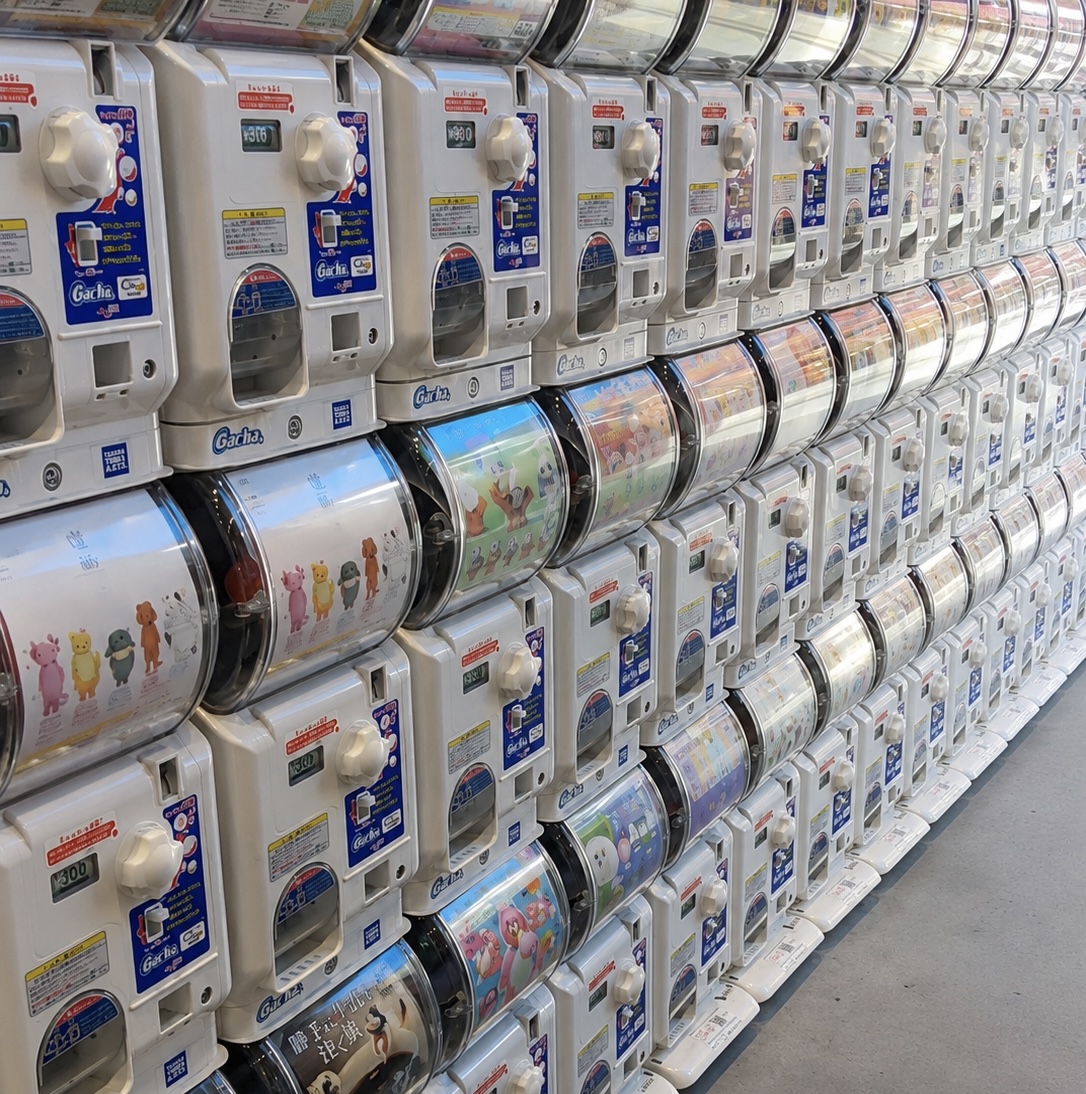
They were everywhere. We found them in shopping areas, anime stores, museums, aquariums and dedicated gashapon shops. Sometimes we would pass just a few machines. Other times, there seemed to be hundreds of them.
And at around ¥200 for many of the ones the girls liked, they were very, very easy to justify.
What Is Gashapon?
Gashapon (sometimes written gachapon) are Japanese capsule toy vending machines. You choose a machine based on the collection displayed on the front, insert your coins, turn the handle and a capsule comes out.
The important part is that you don’t know exactly which item from the collection you are going to get.
That’s where the fun — and the danger — begins.
Unlike a claw machine, where you can spend money and walk away with absolutely nothing, with gashapon you are guaranteed to get something. You just might not get the one you wanted.
Personally, I liked those odds much better!
How Much Does Gashapon Cost?
Many of the gashapon the girls were interested in during our trip were ¥200, or roughly a couple of Canadian dollars.
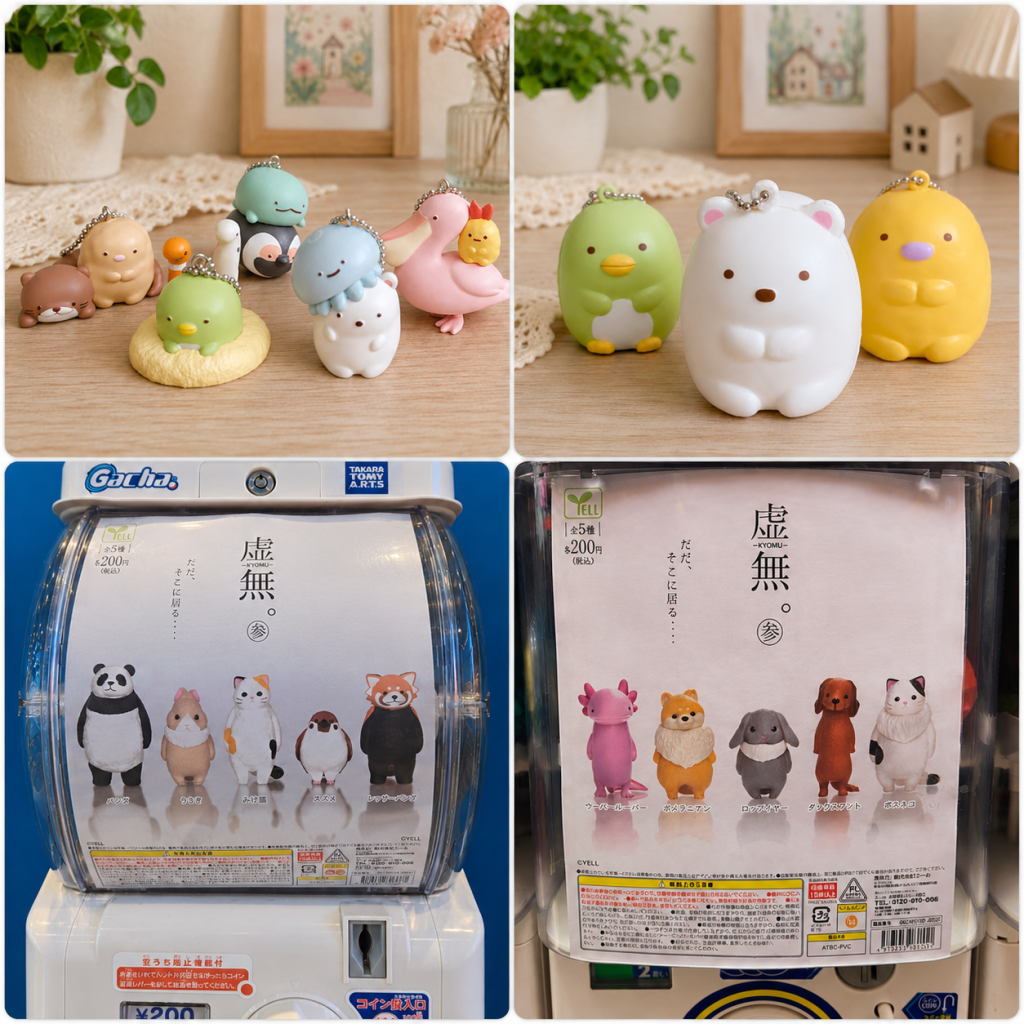
Some of the more elaborate ones cost more. The Sumikko Gurashi keychains I found, for example, were ¥300. A super cute licensed Sumikko Gurashi squishy keychain for around $3 CAD? Yes, please.
At ¥400, I started thinking a gashapon was expensive.
Not expensive in general, obviously. Expensive for gashapon!
For ¥400, it had to be something especially cute, and ideally there couldn’t be an ugly option in the collection. If I looked at all the possibilities and thought, “I would be happy with any of these,” it was much easier to put those coins in.
Which brings me to one of my biggest gashapon tips.
Look at ALL the Choices Before You Play
Every machine shows you the different items you might receive.
Look at all of them before putting in your money.
If there are five possibilities and you love four of them, your chances of being happy are pretty good.
If there are five and you only want one?
Proceed with caution.
Because once you start thinking, “I’ll just try one more time,” things can escalate quickly.
I speak from experience.
Sometimes You Really, Really Want Shirokuma
At the Kyoto International Manga Museum, I found a Sumikko Gurashi gashapon with adorable squishy keychains for ¥300.
I wanted Shirokuma.
Not just any cute Sumikko Gurashi character. Shirokuma.
So I played until I got Shirokuma.
Later in Tokyo, we visited Sunshine Aquarium, where I found another Sumikko Gurashi gashapon. This time the keychains had a sea theme.
Again, I wanted Shirokuma.
And yes, again, I kept playing until I got one.
Fortunately, all the other characters were super cute too, so getting them wasn’t exactly disappointing.
And duplicates or characters that weren’t our first choice didn’t have to go to waste. The girls could keep some of them, and others could become little gifts for their friends back home. They were perfect for that: cute, inexpensive, easy to pack and often not as easy to find at home.
Suddenly that extra attempt at getting Shirokuma seemed perfectly reasonable.
At least that’s what I told myself.
Bring Cash
The gashapon machines we encountered were cash-only.
You generally need ¥100 coins, although larger gashapon areas often have machines that will change bills into coins.
So you don’t necessarily need to spend your trip carefully hoarding every ¥100 coin you receive.
You do, however, need cash.
And honestly, gashapon turned out to be a great way to use all those coins we kept getting back from shops anyway.
What else were we supposed to do with them?
After a while, ¥100 coins stopped looking like money and started looking suspiciously like gashapon tokens.
Of course, that argument becomes slightly less convincing when you put another bill into the change machine because you have decided that you absolutely need a particular character.
There was at least one natural spending limit: when we ran out of cash, we had to stop.
Probably for the best.
Where Can You Find Gashapon in Japan?
Almost everywhere, apparently.
We expected to see plenty of machines in places like Den Den Town in Osaka and the anime and shopping areas of Tokyo. We didn’t necessarily expect to encounter tempting machines at places like the Kyoto International Manga Museum and Sunshine Aquarium.
That’s part of what made them fun.
You don’t really need to add “go find gashapon” to your Japan itinerary. If you spend any time shopping, visiting popular attractions or exploring areas with anime and character stores, chances are they will find you.
There are also enormous dedicated gashapon stores with row after row of machines.
Those can be dangerous.
You have been warned.
Gashapon vs. Claw Machines
We tried both in Japan, and I much preferred gashapon.
Claw machines can certainly be fun, but you can also put in several hundred yen and leave with nothing.
With gashapon, you’re getting something every time.
You might not get exactly what you wanted, but if you choose a machine where you like most of the possibilities, you have a pretty good chance of walking away happy.
For us, gashapon ended up costing considerably more than we originally expected during the trip.
But unlike the money we spent unsuccessfully trying to win things from claw machines, we actually came home with a collection of cute little toys and keychains.
The Real Gashapon Budget Problem
The problem with gashapon isn’t really that they’re expensive.
It’s that they’re so inexpensive that they’re incredibly easy to justify.
¥200?
That’s only a couple of Canadian dollars.
And look how cute it is!
Then someone else finds one.
Then you see another collection.
Then there’s a character you really want.
Then you have a few ¥100 coins left over from buying something else, and surely those coins need to be spent somehow.
“It’s only a couple of dollars” can become a surprisingly expensive sentence when you say it often enough.
If you’re travelling with kids who also love cute characters, anime or miniature things, I would definitely give gashapon its own little line in the travel budget.
Seriously.
My Gashapon Tips for First-Time Visitors
Before putting your coins into a machine, look at the entire collection and ask yourself whether you’d be happy with most of the possibilities.
Keep some cash with you, but don’t worry too much about collecting ¥100 coins ahead of time. Larger gashapon areas often have change machines.
Decide how badly you really want one particular character before you start chasing it. One ¥200 or ¥300 attempt is cheap. Several attempts are… still surprisingly easy to justify.
If you’re travelling with other people, figure out whether anyone else would want your duplicates. They can also make fun little gifts to bring home.
And perhaps most importantly, consider setting a gashapon budget before your trip.
We didn’t.
We probably should have.
Are Gashapon Worth It?
For us, absolutely.
They weren’t an attraction we planned our days around. They were just one of those little things that kept appearing throughout the trip and made Japan even more fun.
We would spot a machine, stop to look at the collection, decide whether anything was cute enough to justify a few hundred yen, and see what came out.
Sometimes we got exactly what we wanted.
Sometimes we didn’t.
And sometimes we apparently decided that the only reasonable solution was to keep playing until Shirokuma finally appeared.
For only a few dollars a try, can you really blame us?